

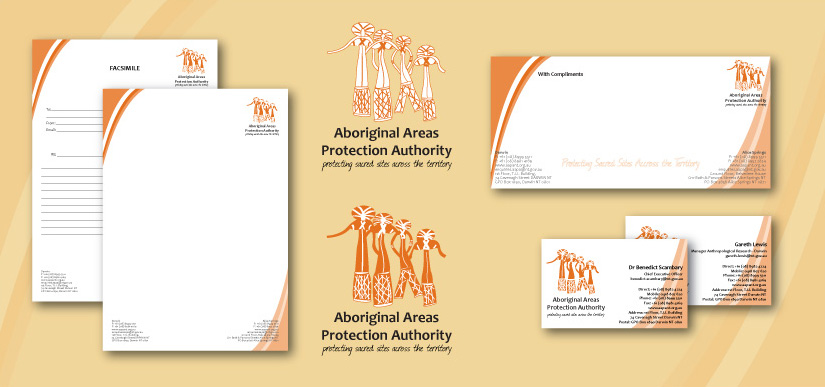
A logo is your businesses visual mark and typically, one of the most important assets of your brand as it is often the first thing that your customers will see.
But what separates a good logo from a great one and why is it so important?
A great logo, designed with purpose, should be simple, versatile and relevant to your business to effectively convey who you are. That is a lot to get into a single visual element.
With a strategically designed logo, you can summarise it into the 3 main categories.
- Simple – Keep your logo clean, making it easily recognisable and memorable by using clean modern type, geometric shapes and/or symbols. This will lend itself to making the logo versatile for various applications in the real world.
- Versatile – Logos need to be scalable so something that can appear as something small on digital uses like social media platforms and websites and large enough for use on printed material, pull up banners or event on billboards. A simple logo that is clean can make applications like uniform embroidery more legible and cost effective.
- Relevant – The logo should align to your brand, the business and convey who you are to your audience. This is where the design element and colours can play an important role. A relevant logo should speak to your audience, not just to you.
A strategically designed logo will go through a process to determine all of this and provide you with a timeless logo that is simple, versatile and relevant that can be transferred to all your internal and external marketing requirements.
A logo doesn’t sell (directly), it identifies.” – Paul Rand
Dubbed the father of graphic design he was the creator of logo’s inc. IBM, UPS, Westinghouse and ABC.
5 steps to design a lasting logo
To help you understand what the process is to create a strategically designed logo, we have broken the process up into the 5 topics below and explained what is involved in each of the stages.
01: Discover – Research the brand and audience
Usually in the form of a kick off meeting or a survey, a discussion between the designer and the business would come first. This is to discover who the business is and what you do. This is a great time to look at things like, the businesses brand, vision and mission statement and research the businesses main competitors, audience and industry.
A discussion around who the audience is also is a great item to discuss. For example, your business may provide say training services to the maritime industry so the brand assets should appeal to people looking for a reputable training organisation who want to get into the industry. So, one consideration is that this industry will include professions such as the seafood, tourism, transport, freight and even the oil and gas industry. So, to appeal to these larger organisations, a sharp, clean professional corporate logo maybe better suited then including symbols of boats or fish. As these industries are major economic contributors you don’t want to have a logo that only appeals to potential students. After all, these students could come from these large organisations or will be employed by them.
02: Define – Analyse and define direction
With the discovery phase done and the research analysed, it’s time to collate all of that into a problem statement and direction. The problem statement will help to define what a logo will be used on, or what the current logo doesn’t work on, like a complex logo that can’t be embroidered on uniforms.
From the discussion about the businesses vision, mission and targeted audience, the logo core message or value is defined. What message or emotion should it convey? What typography should be used? Should it be light, bold, modern or classical? What direction should the design take? Should it be made up of type, symbols or graphic or a combination of?
Yes, that’s a lot of questions, but this is where your designer will start to brainstorm ideas and sketch up options. The brainstorm sketching phase is usually done in black and white only, to focus on the style and to ensure it works as a single colour, amongst many other reasons.
Sometimes at this point, you may be presented with sketches to choose a concept and that is the concept that is taken through to the design phase. This could also include a palette of colour for choice also as colours are normally defined during this step of the process.
03: Design – craft and refine
The preferred concept is chosen and then work begins to refine the concept to ensure it matches the brand, tone and image. Some of the refinement involves crafting the:
- Typography – A classical serif font, which has those decorative elements on the end of each character like Times New Roman or Baskerville. A sans-serif font, considered to be more clean or modern font with examples like Helvetica, Futura or Calibri.
- Colours are incorporated and finalised using the phycology of colour meanings and impressions that colours may invoke. Examples of these are blues that represent professionalism, or red for energy, excitement or urgency, and of course green is synonymous with freshness, environmental or sustainable. Careful consideration needs to be exercised when selecting colours.
- Shapes or symbols are refined and often tested to ensure legibility when scaling.
A final concept is then presented again to the business for approval to progress to the next stage.
04: Develop – Develop the final design and test
Now that the logo concept has been designed, it is time to check the logo and variations for versatility, scalability and applications. Does it look good in practice on stationery, and other materials which is normally done by using mock-ups. These are not real products but a great way of testing to see the logo in application while in the digital form.
It may also be tested to check the usability on a solid background or when using it on an image overlay, remembering these are not finished designs but mock-ups only.
At this point you may also seek feedback from family, friends or staff. If you are seeking feedback more broadly it is a good idea to ensure you follow some simple engagement rules and explain the logo, why you chose to develop this concept and refine it as major changes in a design agency at this point may result in the project scope being expanded, increasing the cost of development.
Oh, and don’t forget to close the loop on any engagement you do.
Any final feedback or tweaks are then conducted and applied to the concept that is being refined.
05: Deliver – Finalise & Implement
With the logo approved, the logo files and variations are outputted and saved ready to be supplied to you. These are usually various formats for use on print (Vector based) or for use on screen or web applications (Bitmap) which will enable the organisation to provide the right file format for the right application.
To get the logo into real world you would then move onto perhaps creating a brand guide or preparing all the templates and other collateral that is used in the business.
So, as you can see there is a lot that goes into strategically designing a logo and there is of course a lot more involved than what is mentioned here.
Thanks for reading this article, we hope you enjoyed it. To stay up to date with articles like this, subscribe to our newsletter or go back to the news section to find more articles like this one.
