
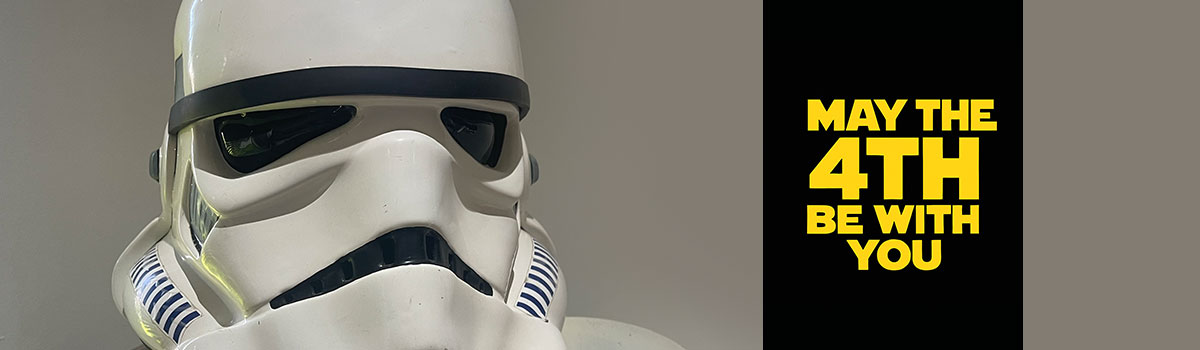
Few brands have built the same level of recognition, anticipation and long-term audience loyalty as Star Wars.
What organisations can learn from the Star Wars marketing strategy
May the Fourth be with your marketing. Star Wars demonstrates how storytelling, anticipation and consistent brand experiences can build a loyal audience over time.
First, let me start by saying the article below is my own thoughts and opinions, sourced from various articles across the web, including Wikipedia.
For full transparency, I should also let you know that my wife is a mad Star Wars fan. I’m originally a Trekkie, which made for some fun conversations in our house, but I’ve learned to appreciate and enjoy the franchise – and even respect it.
OK, with that out of the way, let’s go back to 1977 and the marvel of Star Wars, the movie that was later retitled Star Wars: Episode IV – A New Hope.
Picture it: 1976 saw the rise of movies like Rocky, the remake of King Kong, Taxi Driver (a controversial cop movie) and the horror The Omen.
Skip to 1977, and we’re still following the success of cop movies with the release of Smokey and the Bandit. Then moviegoers were treated to a global phenomenon: the sci‑fi epic Star Wars, released on 25 May 1977, which revolutionised the genre.
But why was Star Wars so popular?
Apart from an amazing storyline about good versus evil, with relatable heroes and villains, viewers were treated to superb storytelling and major advancements in movie special effects. But think about it… how do you portray all of this in 1977?
At the time:
- advertising was largely paper‑based, relying on newspapers and magazines
- TV was becoming more common, but colour sets cost around $1,000 (more than $8,000 today), putting them out of reach for many households
So how did the first Star Wars movie market itself to audiences?
This is where things get interesting. It was an innovative approach for its time and helped shape not only the marketing of a movie, but also the creation of a loyal following that drove people to cinemas. Earning approximately $755 million at the worldwide box office, the film held the title of highest‑grossing movie until the release of E.T.
The marketing appears to have been very well planned. (See where we’re going with this.)
Despite the studio not being confident the movie would be a success, George Lucas and the studio released a six‑issue comic book adaptation of A New Hope through Marvel Comics, spearheaded by writer Roy Thomas and artist Howard Chaykin. The series was first published in April 1977, before the film’s release, and concluded with the sixth issue in December 1977.
George Lucas also sold the merchandising rights to Kenner Products for, I believe, about $100,000. The figurines and toys, which went on sale in 1978, were so popular that Kenner launched the line with the “Early Bird Certificate Package” during Christmas 1977 due to production delays.
So, even though the movie launched in 1977, there were already comics and action figures helping to set the scene, provide backstory, and build hype.
As we all know, the movie became a trilogy due to the success of the first film and is now considered a cult classic.
Star Wars didn’t just change cinema. It changed how films are marketed, how brands tell stories, and how fandom is built.