
A clear logo design process helps create a visual identity that is simple, relevant, versatile and ready for real-world use.
A logo is one of your brand’s most recognisable assets and is often the first thing customers notice.
But what separates a good logo from a great one and why does it matter?
What makes a great logo?
A great logo, designed with purpose, should be simple, versatile and relevant to your business. That is a lot to achieve in a single visual element, so we break it down into three key principles.
Simple
Keep the logo clean so it’s easily recognisable and memorable. Use considered typography, geometric shapes or simple symbols to create clarity and impact.
Versatile
A logo must work at all sizes: small for social media and websites, and large for printed materials, pull‑up banners or billboards. Simpler logos translate better across applications and are often easier and more cost‑effective to reproduce—for example, on embroidered uniforms.
Relevant
The logo should reflect your brand and speak to your audience. Colour, style and form all play a role — a relevant logo communicates who you are, not just what you like.
A strategically designed logo follows a clear process to address these principles, resulting in a timeless identity that works across internal and external marketing touchpoints.
A logo doesn’t sell (directly), it identifies.” – Paul Rand
Dubbed the father of graphic design he was the creator of logo’s inc. IBM, UPS, Westinghouse and ABC.
5 steps to design a lasting logo
To help you understand the process of creating a strategically designed logo, we’ve broken it into five stages below and explained what’s involved in each.
01. Discover: research the brand and audience
Usually delivered as a kick‑off meeting or a short survey, this discussion between the designer and the business is about discovering who the business is and what it does. It’s a good time to review the business’s brand, vision and mission, and to research main competitors, target audience and the wider industry.
Talking about the audience is especially important. For example, if your business provides training services to the maritime sector, your brand should appeal to organisations such as seafood companies, tourism operators, transport and freight businesses, and oil and gas firms — as well as potential students. To appeal to these larger organisations, a sharp, professional corporate logo may be more suitable than literal symbols of boats or fish. After all, students may come from these organisations or be employed by them.
02. Define: analyse findings and set direction
With the discovery phase complete and the research analysed, we collate the findings into a problem statement and design direction. The problem statement helps define where the logo will be used and what the current logo doesn’t work on — for example, a complex logo that can’t be embroidered on uniforms.
From the discussion about the business’s vision, mission and target audience, we define the logo’s core message or value. What message or emotion should it convey? What typography should be used – light, bold, modern or classical? What direction should the design take? Should it be typographic, symbolic, graphic, or a combination?
Yes – that’s a lot of questions. This is where your designer will brainstorm ideas and sketch options. Sketching is usually done in black and white to focus on form and to ensure the logo works in a single colour, among other reasons.
At this point you may be presented with sketches to choose from. The chosen concept is then taken through to the design phase. Colour palettes are often defined during this step as well.
03. Design: craft and refine
The preferred concept is chosen and work begins to refine it so it matches the brand, tone and image. Refinement typically involves:
- Typography – choosing a style that supports the brand (for example, a classical serif with decorative elements, or a clean sans‑serif such as Helvetica, Futura or Calibri).
- Colour – finalising palettes using colour psychology and the impressions colours invoke (for example, blue for professionalism; red for energy or urgency; green for freshness or sustainability). Careful consideration is required when selecting colours.
- Shapes and symbols — refining forms and testing for legibility at different sizes.
A final refined concept is then presented to the business for approval before progressing to the next stage.
04. Develop – test versatility and applications
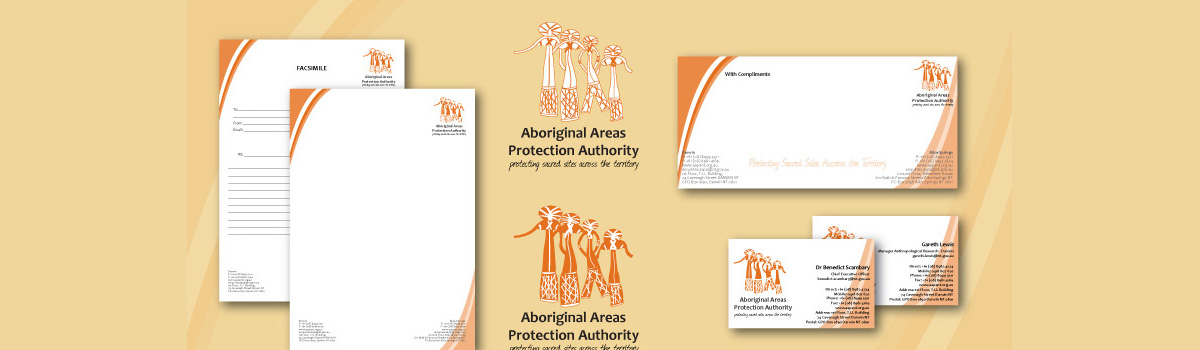
Now that the logo concept has been designed, it’s time to check variations for versatility, scalability and application. This is usually done using mock‑ups — digital representations of stationery, signage and other collateral — to see how the logo performs in real‑world contexts.
You may also test the logo on solid backgrounds and image overlays. These are mock‑ups, not finished designs, but they help reveal usability issues.
If you seek wider feedback from staff or stakeholders, explain the design rationale and manage expectations — major changes at this stage can expand the project scope and increase costs. Don’t forget to close the loop on any consultation.
Any final feedback or tweaks are then applied to the refined concept.
05. Deliver: finalise and implement
With the logo approved, the final files and variations are prepared and supplied. These typically include vector formats for print and scalable use, plus bitmap files for web and screen applications – ensuring you have the right file for each application.
To roll the logo out in the real world, you may then develop a brand guide and prepare templates and other collateral used across the business.
Final note
Strategically designing a logo involves research, testing and refinement. There is more involved than what’s mentioned here, but following this process leads to a timeless, usable identity.